“I’m sorry—what company is this, again?”
Another day, another confounding call.
You’ve seen this hundreds of times before—
Your rep has done everything right; the prospect looked great (on paper, anyway), they met your SQL, the content performed, and the follow-up was on time.
And yet there’s someone on the other end of the line who is adamant that they have no idea who you are.
The rep recaps the basics, stating the company name and the asset title.
There’s an awkward pause… and then the call ends.
“Another bogus lead,” they mutter. Except it probably wasn’t a bogus lead.
What it was was a predictable outcome… and that outcome has a name:
The Recall Gap.
What is the Recall Gap?
The Recall Gap is the measurable distance between a user registering for your content and the moment when they can reliably recall and cite your brand from memory.
This is different from the Consumption Gap, which measures time.
The Recall Gap measures memory.
One is a delay. The other is a distinction… or a disappearance.
And while the Recall Gap begins forming at the moment of registration, cognitive science makes clear that encoding (a fancy science word for recall) is weakest at the exact moment of the form fill—meaning the gap starts widening before your prospect has even left the page.
The Recall Gap Isn’t Just Happening to You

We’ll explain what the Recall Gap is in a moment. But before we go further, there’s something that must be established right away: This isn’t a vendor problem, a content problem, or a follow-up problem—at least not primarily.
Unless you’re blatantly instructing your SDR team to call prospects seconds or weeks after they’ve entered your CRM, chances are, this is not your fault. This conversation plays out tens of thousands of times per day, across every vertical, every company size, and every demand gen team running a content-led program.
All of this happens to…
- The teams with the expensive intent data and meticulous lead scoring.
- The teams with 24-hour SLA enforcement and battle-tested SDR scripts.
- The best-run programs in B2B.
Why is This Happening?
The short answer is that you, your business, and anyone reading this sentence are largely operating in a cognitive environment that your current follow-up model wasn’t designed for.
So, no, your prospect (likely) isn’t lying to you. They’re not being evasive, and they’re not trying to be difficult. Neurologically, they genuinely do not remember you.
And that is a predictable outcome, not a random one.
The Recall Gap does not question whether your registrant will remember the insight from your content. They often do; sometimes remarkably well.
They may be quoting your statistics in internal meetings and may have even passed your white paper to a colleague. At the heart of the Recall Gap lies a simple question: Can your prospect connect that insight back to you?
Often, they cannot. That distinction matters.
Why This Is a Memory Problem, Not a Lead Quality Problem
Original Photo by Bret Kavanaugh on Unsplash
Most teams, when confronted with the “who are you?” call, reach for one of three diagnoses:
- Bad lead
- Bad timing
- Bad follow-up
The instinct is natural… but the diagnosis is usually wrong.
Consider what’s actually happening at the other end of your registration form.
Imagine your prospect is at their desk—where the majority of B2B content registration and demand occurs—laptop open, browser full of tabs, Slack pinging, calendar notifications popping up every 15 minutes. They find your asset and complete the form.
This is where the Recall Gap begins.
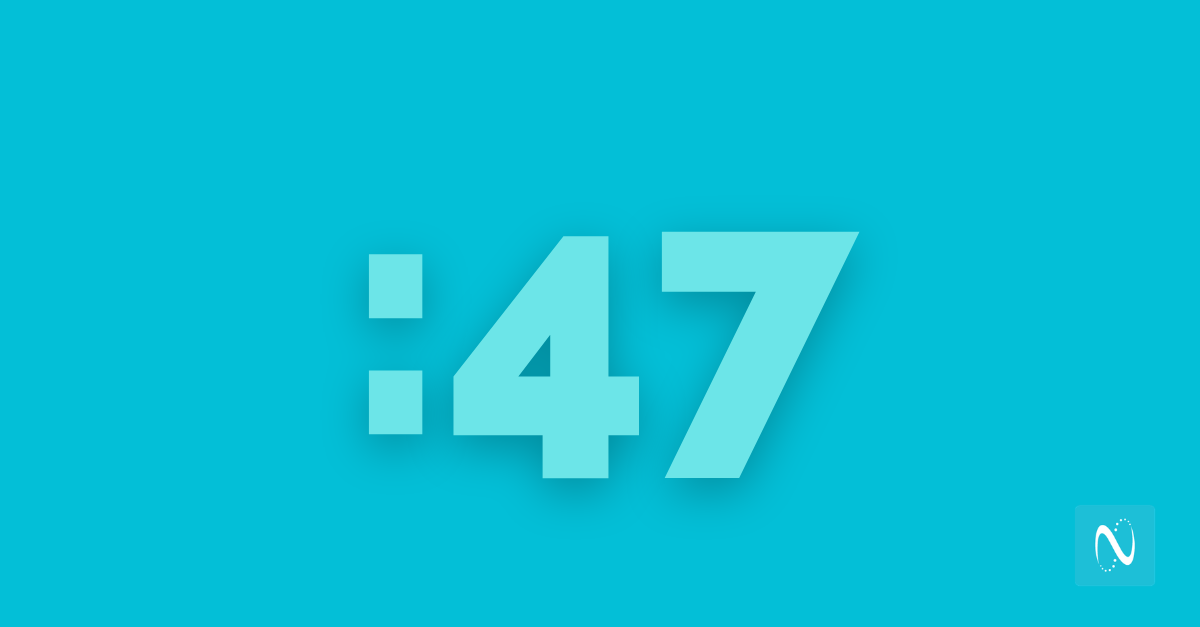
Your form fill didn’t get a moment of undivided attention. If you were lucky, it got 47 seconds before something else took over. And then there’s what researchers call the Google Effect—a 2011 study from Columbia and Harvard demonstrating that when people believe information will be retrievable later, the brain deprioritizes encoding it in the first place.
Your prospect’s brain, on some level, tagged your vendor name as “findable later” the moment they hit submit. Which means the act of completing your form may have reduced the likelihood that they’d remember you.
The “cold lead” label misdiagnoses what happened. The cognitive environment was the problem.
This is important to sit with, because the instinct to solve it by increasing follow-up speed or volume doesn’t address a structural memory problem. It often makes it worse.
The Recall Gap as a Measurement and a Framework

Photo by Conny Schneider on Unsplash
Naming this problem precisely is the first step toward solving it.
The Recall Gap is not an abstraction. It is a measurable, predictable phenomenon, shaped by documented forces:
- The cognitive conditions present at the moment of registration.
- The competitive interference in the hours and days that follow.
- The format of the content registered for.
- And the length of the Consumption Gap.
Some registrants have a narrow Recall Gap. Others have a very wide one. The Recall Gap is also a framework for evaluating your existing demand gen operation with an honest set of questions:
- Does your first-touch email assume your prospect remembers you?
- Does your SDR script assume they’ve read the content?
- Does your nurture sequence end in 30 days for a buyer on a 272-day cycle?
- Are you treating a Playbook download and a Cheat Sheet download as the same signal?
If the answer to most of those is yes, you’re not alone. Most teams are. And this series will walk through exactly why that’s a problem and what to do instead.
What You’ll Learn About the Recall Gap

Original photo by DS stories via Pexels.
Over the next month, we’ll build a complete picture of the Recall Gap—from the cognitive science that drives it, to the data signals that predict it, to the operational changes that close it.
Here’s what you can expect:
- A deep dive on the structural shifts that made the Recall Gap inevitable: why buying cycles have stretched, why the Consumption Gap keeps widening, and why registrant recall is significantly weaker than most teams assume.
- The cognitive science—six bodies of peer-reviewed research that explain, with precision, why your prospect’s brain is working against you by default.
- Unpacking the format signal: how the content type a registrant chooses predicts their intent depth, their engagement timeline, and the likely width of their Recall Gap, and what that means for follow-up strategy.
- Three pillars for designing around the Recall Gap: assuming zero recall, rebuilding the nurture clock, and deploying what we call the olive branch.
- A 30-day implementation checklist, sequenced by impact, designed to be adopted without burning down what’s already working.
The Recall Gap is Not Your Fault
The digital environment in which your prospects live and work is cognitively hostile to the kind of memory encoding your follow-up depends on. That’s not hyperbole—it’s a documented property of modern desktop behavior, and it doesn’t discriminate by industry or budget.
But closing it is your opportunity.
Because while the Recall Gap is universal, most teams haven’t named it, measured it, or designed around it. The ones who do will have a meaningful and durable advantage.
Not through more volume or faster follow-up, but through a more accurate mental model of what’s actually happening between registration and the moment your prospect finally picks up the phone… and remembers who you are.