
B2B buyers are under pressure. (Cue Bowie and Queen.)
Their wallets are lighter, their teams are leaner, technology is outpacing adaptation, and thanks to the proliferation of AI, security risks have never been greater.
But here’s what’s fascinating—and actionable—about this chaos: it’s creating patterns that smart content marketers can leverage.
So, how do we get a handle on all of it so we can leverage this chaos?
NetLine’s 2026 B2B Content Trends & Planning Guide is a good starting point.
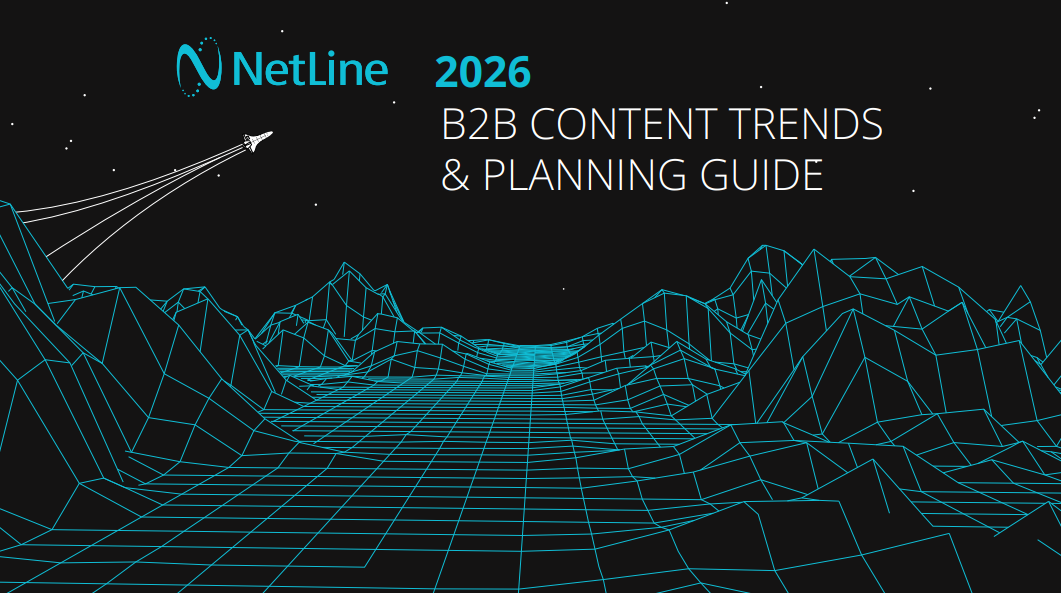
Based on 7+ million first-party registrations, this guide offers a look at cross-industry analysis and 2026 investment priorities, informed by early demand signals. The result is an actionable framework for content marketers and strategists.
In reviewing this guide, we’ve identified five forces that are reshaping the B2B landscape right under our feet.
1. Strategy and Technology Are Merging

Photo by Stig Nygaard on Flickr
Gone are the days when IT departments made technology decisions in isolation. Today, every system, platform, and infrastructure investment must align with broader business strategies. The stakes are simply too high for anything less.
This shift isn’t happening because everyone suddenly became a strategic thinker. It’s happening because technology decisions now have far-reaching implications for business outcomes. For example, a CRM upgrade isn’t just about better data management—it’s about improving customer retention, driving revenue, and staying competitive.
Content Implication: Your technical content needs to bridge the gap between features and business value. Buyers aren’t just asking, “What does this tool do?” They’re asking, “How does this tool help us achieve our strategic goals?” Speak their language by connecting technical capabilities to measurable outcomes.
2. Buying Committees Are Getting Bigger and More Complex

Photo by Alina Grubnyak on Unsplash
Look at the data from any industry, and you’ll see the same pattern: multiple roles converging on the same content topics.
- Healthcare shows executives (22%), IT professionals (22%), and medical staff (15%) all researching similar solutions.
- Manufacturing reveals IT teams (22%), executives (16%), and production managers (15%) consuming the same content.
This isn’t just a trend—it’s the new normal. Buying decisions now require cross-functional alignment because the impact of these decisions spans the entire organization.
Content Implication: Your content needs to resonate with diverse audiences simultaneously. For example, a white paper might need to include both the technical depth that satisfies IT evaluators and the strategic overview that convinces executives. Think of your content as a bridge that connects different stakeholders with a shared understanding.
3. Security Is Everyone’s Problem Now

Photo by David Goehring on Flickr
Across every industry NetLine analyzed, security topics are trending. Leaders at all levels—whether they’re hospital administrators, manufacturing VPs, or school district superintendents—are grappling with issues like intrusion detection, data recovery, and infrastructure protection.
What’s driving this shift? Security has evolved from a technical consideration to a matter of business continuity. For example, ransomware attacks rose by 32% in 2025, causing not just data breaches but also operational disruptions and financial losses that can cripple organizations.
The content implication: Buyers want to know how your solution will keep them operational when the worst happens. Frame your messaging around resilience and risk mitigation. Stop treating security as a feature and start positioning it as a form of business insurance.
4. Workforce Challenges are Reshaping Everything

Photo by Clem Onojeghuo on Unsplash
Human resources topics are trending in manufacturing. Not because factories suddenly discovered they need people, but because the people they have are stretched beyond capacity, and the people they need seem to be impossible to find.
While the manufacturing industry is the example, it’s not the exception. This workforce crisis is forcing a fundamental rethink of how organizations operate.
- The manufacturing director isn’t researching HR software because they want to—they’re researching it because their production line depends on three people who could retire tomorrow, taking decades of institutional knowledge with them.
- The technology company isn’t exploring employee benefits for fun—they’re exploring them because their competitors are poaching talent faster than they can hire.
The ripple effects are reshaping entire industries. Solutions that once required dedicated teams are now operating with skeleton crews. Systems that assumed stable staffing now need to accommodate constant turnover.
The content implication: “How does this help us do more with the team we actually have?” Content that answers that becomes increasingly more valuable… because that’s the question keeping your buyers awake at night.
5. Modernization Isn’t Optional Anymore
Photo by Nikita Zaitsev on Unsplash
Infrastructure management, ERP upgrades, and database modernization are no longer “someday” projects. They’re today’s priorities. Organizations that delayed modernization are now facing mounting risks, from hybrid work demands to security vulnerabilities and AI dependencies.
The reality is stark: legacy systems aren’t just technical debt—they’re business risks. And while modernization can feel daunting, the cost of inaction is even higher. Competitors and prospects won’t wait for you to catch up.
The content implication: Buyers aren’t moved by the change is coming. They need to be convinced that your solution will get them through it. Stop selling modernization as an aspiration and start positioning it as survival.
How to Use These Trends in Your 2026 Content Strategy
Understanding these trends is just the first step. The real challenge—and opportunity—lies in how you respond. Here’s how to align your content strategy with the evolving B2B landscape:
Match Your Formats to Your Audiences
The data reveals clear format preferences that vary by role and industry.
- Technical evaluators gravitate toward White Papers (16-18% preference) because they need depth for complex evaluations.
- Executives prefer eBooks (14-16%) because they need strategic overviews they can consume efficiently.
- Cross-functional teams choose On-Demand Webinars (10-16%) because they support collaborative learning during planning cycles.
Stop creating content based on what you want to produce and start creating based on what your buyers want to consume.
Lead With Business Outcomes
Your buyers don’t care about your technology. What they care about is what your technology enables them to achieve.
For example:
- Security features should translate to operational continuity.
- Efficiency improvements should connect to competitive advantage.
- Modernization capabilities should link to strategic objectives.
Therefore, connecting technical capabilities to business results is always a wise choice.
Address the Whole Committee
Buying decisions involve multiple stakeholders with different priorities. For example:
- The IT director needs technical specifications.
- The CFO needs ROI justification.
- The CEO needs strategic alignment.
Create content that speaks to all these needs, or risk stalling your deals.
Adapt or Fall Behind
The question isn’t whether these forces will shape your buyers’ decisions—they already are. The real question is whether your content strategy will meet buyers where they are or remain stuck in the past.
The B2B buying landscape is evolving rapidly, driven by universal pressures that transcend industry boundaries. The organizations that recognize these patterns and adapt their content strategies accordingly will have a significant edge in 2026.
The 2026 B2B Content Trends & Planning Guide will help you understand where you can seize upon these opportunities.
Choose wisely. Your 2026 results depend on it.